Natural Family Planning: What to Know
Natural family planning (NFP) is a type of birth control that doesn't use medicine or devices to prevent pregnancy. NFP can decrease the risk of pregnancy, although other birth control methods are more effective at preventing pregnancy. NFP doesn't protect against sexually transmitted infections (STIs).
With NFP, you'll need to track the days each month when you ovulate. Ovulation is when your ovary releases an egg. Ovulation is the time of the menstrual cycle when you're most likely to get pregnant.
Not having sex during ovulation lowers the chance of pregnancy.
How does NFP work?
You can use NFP to track days between periods and guess (predict) the release of an egg. You can use cycle patterns to decide when to have sex or not have sex.- Many people have a period every 28–30 days, but cycles vary. Cycles can range between 23–35 days. A short or long cycle will affect the period of time that you can get pregnant.
- Ovulation happens 12–14 days before the start of the next period. The days you're most likely to get pregnant (fertile days) will vary based on how many days are between periods.
- A person with a 28-day menstrual cycle has about 6 days a month when they're the most fertile.
- An egg is fertile for 24 hours after it leaves the ovary. Sperm can live for 3 days or more.
If you decide that you want to get pregnant, NFP can help you know when pregnancy is most likely to happen.
What NFP methods can be used to prevent pregnancy?
The basal body temperature method
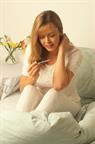
During ovulation, a slight increase in body temperature is common.
To use this method:- Take and record your temperature every morning before getting out of bed. You may record temperatures anywhere you can best access and view patterns of change. You may track:
- On a piece of paper.
- On your calendar.
- On a chart.
- In an app on your phone.
- Do not have sex from the day the menstrual period starts until 3 days after the increase in temperature.
If your temperature has already gotten higher, ovulation has already happened. You're more likely to get pregnant 2 to 3 days before the charted cycles of body temperature increase.
Things that raise your body temperature and make it hard to guess when you'll ovulate:- Having a fever.
- Not sleeping well.
- Not drinking enough fluid.
- Certain work schedules.
The cervical mucus method
Right before ovulation, mucus from the cervix changes from dry and sticky to wet and slippery. The cervix is the lowest part of the uterus.
To use this method:- Check the mucus every day to look for these changes. Ovulation happens on the last day of wet, slippery mucus.
- Do not have sex starting when you first see wet, slippery mucus until 4 days after it stops or returns to normal.
- With this method, it's safe to have sex:
- After the 4 days have passed, and until 10 days after the menstrual period starts.
- On days when mucus is dry.
Cervical mucus can increase or change due to reasons other than ovulation, such as infection, lubricants, some medicines, and being aroused.
The symptothermal method
This method combines the basal body temperature and the cervical mucus method and is more accurate.
The calendar method
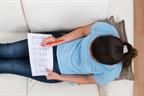 This method involves tracking menstrual cycles to find out when ovulation happens. This method is helpful when cycle length varies. To use this method:
- For 6 months, write down when periods start and end and the length of each menstrual cycle. The cycle length is from day 1 of the current menstrual period to day 1 of the next period.
- Use this information to find when you'll likely ovulate. Avoid sex during that time. You may need help from your health care provider to guess the days you're most likely to get pregnant.
- Ovulation usually happens 12–14 days before the start of the next menstrual period.
- Light vaginal bleeding, called spotting, or belly cramps during the middle of a menstrual cycle may be signs of ovulation. However, some people don't have these symptoms.
The standard days method
This method is based on studies of hormone levels during normal menstrual cycles. This method works best for people with cycles that are 26–32 days long.- If your cycle is 26–32 days long, you're most likely to get pregnant between days 8 and 19.
- To prevent pregnancy, you should not have sex during this time, or you should use a barrier method of birth control.
When should I not use the NFP method?
You should not use NFP if:- You have irregular menstrual periods, such as:
- You sometimes skip a period.
- You have bleeding from your vagina that isn't normal.
- You recently had a baby or are breastfeeding.
- You have an infection of your vagina or cervix.
- You take medicines that can affect the mucus from your vagina or body temperature, such as:
- Antibiotics.
- Thyroid medicines.
- Antihistamines that are in some cold and allergy medicines.
- You do not want to become pregnant at this time. Other methods of birth control are more effective at preventing pregnancy.
- You're worried about STIs.
This information is not intended to replace advice given to you by your health care provider. Make sure you discuss any questions you have with your health care provider.

