
How to Care for Your PICC Line at Home
A peripherally inserted central catheter (PICC) is a soft tube that's put in a vein in your arm. In rare cases, it may be put in your leg. The PICC can be used to send medicines and IV fluids quickly into your bloodstream.
You may have a PICC placed:- To give you medicines and nutrition.
- To give you fluids or blood products.
- To take blood samples often.
- If there's trouble placing a peripheral intravenous (PIV) catheter.
If well cared for, a PICC can stay in place for many months.
Medicines and PICC care can be managed at home with the help of a family member, caregiver, or home health care team.
How to care for your PICC
Take care of your PICC as told by your health care provider.
Preventing infection
-
Wash your hands with soap and water for at least 20 seconds before and after you care for your PICC. If you can't use soap and water, use hand sanitizer.
- Flush the PICC as told.
- Tell your provider right away if the PICC is hard to flush or won't flush.
- Do not use force to flush the PICC.
- Use clean and germ-free (sterile) supplies only.
- Keep the supplies in a dry place.
- Do not reuse needles, syringes, or any other supplies.
- Check your PICC site every day for signs of infection. Check for:
- Redness, swelling, or pain.
- Fluid or blood.
- Warmth.
- Pus or a bad smell.
Preventing other problems
-
Do not use a syringe that is smaller than 10 mL to flush the PICC.
-
Do not have your blood pressure checked on the arm that has the PICC.
-
Do not ever pull or tug on the PICC. Keep it secured to your arm with tape or a stretch wrap when not in use.
-
Do not take the PICC out yourself. Only a trained care team member should remove the PICC.
-
Keep pets and children away from your PICC.
How to care for your PICC bandage
-
Wash your hands with soap and water for at least 20 seconds before and after you care for your PICC bandage. If you can't use soap and water, use hand sanitizer.
-
Do not change your PICC bandage unless you've been taught how to do so. Your PICC bandage needs to be changed if it gets loose or wet.
-
Leave the tape or device that secures your PICC to your skin alone.
-
Keep the bandage clean and dry. Secure it with tape if the edges stop sticking to your skin.
-
Do not take baths, swim, or use a hot tub until you're told it's OK. Ask if you can shower. When you're told it's OK to shower:
- Ask your home health care team to teach you how to wrap the PICC.
- Cover the PICC with clear plastic wrap and tape to keep it dry.
Follow these instructions at home:
Disposing of supplies
-
Throw away syringes in a container that's meant for sharp items (sharps container). You can buy a sharps container from a pharmacy. You can also make one by using an empty, hard plastic bottle with a lid.
-
Place any used bandages or infusion bags into a plastic bag. Throw that bag in the trash.
General instructions
-
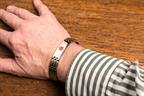
Always carry your PICC ID card or wear a medical alert bracelet.
-
Keep the PICC clamped at all times, unless it's being used.
-
Always carry a smooth-edge clamp with you to clamp the PICC if it gets damaged.
-
Do not use scissors or sharp objects near the PICC.
-
You may bend your arm and move it freely. If your PICC is near or at the bend of your elbow, avoid making repeated movements that involve your elbow.
-
Do not lift anything heavier than 10 lb (4.5 kg) until you're told it's OK.
-
Keep all follow-up visits. You'll need to have your PICC bandage changed at least once a week.
Contact a health care provider if:
-
You have pain in your arm, ear, face, or teeth.
-
You have a fever or chills.
-
You have signs of infection around your PICC site.
-
Your skin feels hard and raised around the PICC site.
-
You have a red streak going up your arm that starts near your PICC.
-
Your PICC bandage has gotten wet.
-
The bandage is coming off, and you haven't been taught how to change.
Get help right away if:
- You have problems with your PICC, such as if:
- The PICC is pulled all the way out.
- If this happens, cover the site with a bandage.
- Do not throw the PICC away. Your provider will need to check that it came out in one piece.
- You can't flush the PICC, or it leaks when you try to flush it.
- The PICC was tugged or pulled and has partially come out. Do not push it back in.
- The PICC makes a sound when flushed.
- There's a hole or tear in the PICC.
- The PICC is pulled all the way out.
-
You feel your heart beating fast or skipping beats.
-
You have chest pain.
-
You feel short of breath or have trouble breathing.
-
You have swelling, redness, warmth, or pain in the arm or leg where the PICC is placed.
-
Do not wait to see if the symptoms will go away.
-
Do not drive yourself to the hospital.
This information is not intended to replace advice given to you by your health care provider. Make sure you discuss any questions you have with your health care provider.

